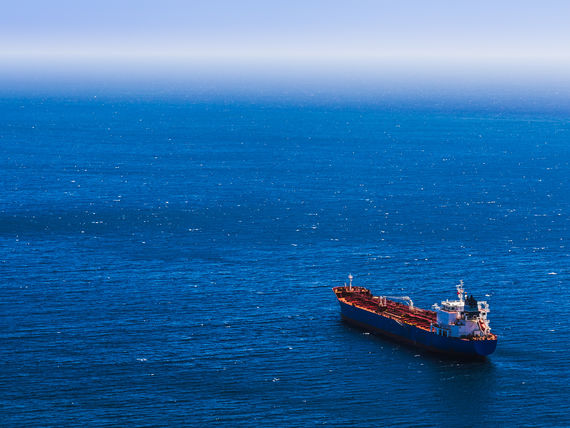
Observed transits of commercial ships through the Strait of Hormuz have come to a halt following a brief surge on April 18, as tensions ratcheted higher after vessels came under gunfire in the waterway and Iran warned against crossings.
No crossings were seen on April 19, according to tracking data compiled by Bloomberg as of early afternoon in London. At least 13 oil tankers turned back toward the Persian Gulf on April 18, abandoning attempts to leave that began after Iran’s Foreign Minister Abbas Araghchi announced a day earlier that the strait was open.
But Tehran again shut the waterway following a refusal by the U.S. to lift its own naval blockade of Iran’s vessels. It followed a period of chaos when some ships tried to race out after Araghchi’s comments, only for many to U-turn. It’s keeping millions of barrels of oil and large quantities of liquefied natural gas locked within the Persian Gulf, threatening to prolong an energy crunch that’s roiled the global economy.
The U.K. Maritime Trade Operations said on April 18 that a tanker was approached by IRGC gunboats off the coast of Oman before being fired at. A container ship was then hit by an unknown projectile in a separate incident while another commercial vessel reported a splash close to it, the UKMTO said later.
The incidents came soon after Iran said it would allow ships to pass through Hormuz for the duration of a ceasefire between Israel and Tehran’s Lebanon-based ally, Hezbollah. U.S. President Donald Trump repeated that the strait was open, but said that a U.S. Navy blockade of Tehran’s vessels would remain. Iran said that was unacceptable and Hormuz was once again closed.
In the short period before Iran closed the Strait of Hormuz again, four tankers, including one hauling 2 million barrels of Saudi and Qatari crude, made it through early on April 18. A total of 18 commercial ships managed to complete outbound transits in the period. Ten ships made the inbound crossing, vessel-tracking data compiled by Bloomberg show.