November 2026 Transport Intel Report: Record Capacity, Firm Demand and Middle East Disruption Keep Freight Markets Unpredictable

Global freight markets are entering the final weeks of 2026 with demand running ahead of last year in both air and ocean. Yet shippers are finding that headline capacity does not always translate into reliable space. Ongoing disruption in the Middle East, elevated fuel costs and operational bottlenecks continue to shape transit times and pricing.

PSA BDP’s November 2026 Air and Ocean Transport Intel Reports examine these developments and what they mean for supply chain planning.  

AI Generated. AI Generative. Air craft plane with cargo shipping delivery move transport. Adventure vacation business vibe. Graphic Art Illustration

Air Freight: Strong Demand Meets Tighter Seasonal Capacity

Air cargo demand remains robust. Global demand grew 7.7% year over year in September, and October tonnages were up around 6%, as growth in most regions offset steep declines in China-to-Europe volumes.

The transpacific stands out. Demand from Asia Pacific to North America continues to outpace capacity, and charters and block space agreements are absorbing much of the additional peak-season freighter capacity.

Capacity is tightening elsewhere, too. The airline winter schedule has reduced belly capacity by about 3%, mainly on transatlantic and intra-European routes.

Instability in Middle East airspace continues to cause cancellations, re-routings and short rate validity. Some Asia-Europe shippers are avoiding Middle East transits altogether, which pushes demand toward other carriers.

Jet fuel prices are more than double year-earlier levels, so fuel surcharges remain a significant cost factor.

Aerial top view of cargo ship with contrail in the ocean


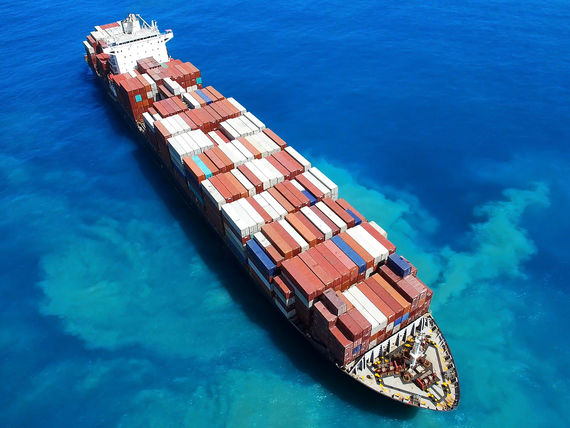
Ocean Freight: Record Capacity Doesn’t Mean More Usable Space 

The ocean market presents a paradox.

Global fleet capacity has grown 5.1% year over year to 33.4 million TEU, and record capacity is deployed on major East-West trades over the last couple of months. However, much of that increase reflects congestion rather than new supply.

Delays at Asian ports have pushed vessels from earlier weeks into October and November. The result is vessel bunching, with double sailings accounting for 13% to 19% of departures on key Asia trades.

Because networks are this disrupted, carriers have blanked far fewer sailings than usual, and global schedule reliability stands at 62%.

Other developments to watch include: 

  • Red Sea return: Around 63% of Far East-Europe capacity now uses the Red Sea at least partially. These routings remain reversible if security deteriorates.

  • Strait of Hormuz: Operations remain heavily disrupted, and carriers are relying on alternative Gulf gateways and contingency routings.

  • Rhine low water: Exceptionally low levels are restricting barge capacity and raising European inland costs.

Rates remain well above last year’s levels on major Asia trades, but three-month outlooks point lower. Traditional seasonal rate patterns are also becoming less reliable, which makes historical benchmarks a weaker guide for budgeting.

Planning for Reliability,
Not Just Capacity

Across both modes, the message is consistent: available capacity is not the same as dependable capacity.

Middle East disruption, fuel costs and operational bottlenecks are shaping service quality as much as supply and demand.

For shippers, this makes several practices more valuable: building transit-time buffers into plans, securing space early on constrained lanes, keeping alternative routings and modes under review, and maintaining close shipment visibility as conditions change.

Global world network


Get the Full November 2026 Transport Intel Reports

This overview covers only part of this month’s market intelligence. The full reports include access to:

  • Trade-lane status and rate outlooks by origin and destination

  • Regional air market trends

  • Ocean capacity and demand comparisons

  • Three-month rate outlooks

  • Regional port congestion indices

  • Deeper analysis of Red Sea, Hormuz and European inland conditions

Request your copy to support more informed decisions in the
months ahead.