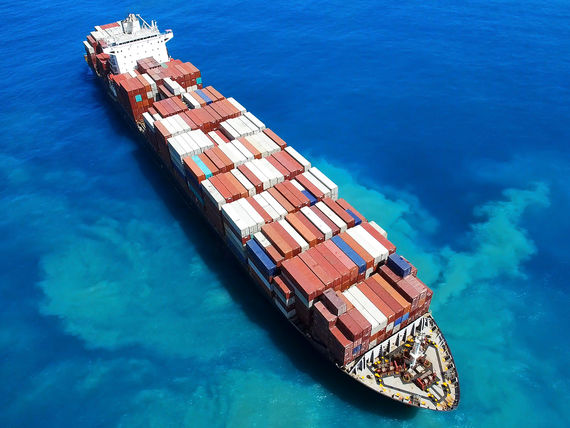
The conflict between the U.S., Israel and Iran may well put off any real hope of a return to Red Sea container ship traffic for the rest of this year, according to Xeneta chief analyst Peter Sand - if Houthi rebels follow through on a pledge to resume strikes.
Before last weekend's U.S.-Israeli strike on Tehran, leading western container lines were just beginning to test the waters of the Red Sea again, hoping that a truce with Iran-backed Houthi rebels in Yemen would hold. During the Gaza conflict, the Houthis built up a demonstrated capability to attack merchant vessels off the Yemeni coastline. The group sank four ships and killed at least eight seafarers with ballistic missile, drone and unmanned-boat strikes over the course of two years.
While much is uncertain about the ongoing conflict between the U.S. and Iran, what's clear is that impacts on oil prices, Middle East economies and shipping through the region are already rippling across global supply chains.
According to an analysis from Oxford Economics, the recent closure of the Strait of Hormuz could cause the per-barrel price of oil to rise from roughly $65 in January, to just under $80 by the second quarter of the year. And although such a spike would be meaningful for energy markets, economists caution that the broader risk lies less in a single price surge, and more in how it interacts with other mounting geopolitical and trade-related pressures.
A U.S. appeals court on Monday returned the lawsuits that led to most of President Donald Trump's tariffs being struck down to the U.S. Court of International Trade, which could determine the process for refunding more than $130 billion to importers.
The U.S. Court of Appeals for the Federal Circuit issued a one-page order granting the motion by importers to send the case back to the trade court, where it originated in early 2025. The motion was opposed by the Trump administration, which said it wanted the case delayed for up to four months to give it time to consider its options.
The trade body reported that total demand, measured in cargo tonne km (CTK), rose by 5.6% compared to January 2025 levels.
“Growth patterns diverged by region. Africa led with an 18.2% rise, extending its streak of double-digit gains. The
Americas registered a decline for the sixth consecutive month,” said IATA.
Capacity, measured in available CTK (ACTK), increased by 3.6% compared to January 2025.
India's current account deficit widened in the October-to-December quarter on the back of a higher merchandise trade deficit, the Reserve Bank of India said on Monday.
The current account deficit stood at $13.2 billion, or 1.3% of GDP, in the third quarter of fiscal year 2025-26, compared with $11.3 billion, or 1.1% of GDP, a year earlier.
In the preceding quarter, the deficit was $12.3 billion, or 1.3% of GDP.
Worldwide Flight Services (WFS) has completed its acquisition of Aviapartner Cargo’s operations at Brussels Airport.
WFS said the purchase has now received “full regulatory approval” and added the deal would add full freighter ramp handling, towing, and airside transportation capabilities.
WFS will also take over Aviapartner Cargo’s 33,000 sq m cargo terminal at the airport, which houses two specialist pharmaceutical handling areas, a Phyto Sanitary inspection point, and dedicated mail and courier handling services.
Colombia’s government is planning reciprocal tariffs of 50% on imports from Ecuador, intensifying an economically damaging spat between the ideological foes.
Colombia’s trade ministry published a draft decree on March 2, raising duties on around 300 goods from the current 30% levy. It still needs to be published in the official gazette to take effect.
Airline European Cargo has announced plans to launch freighter operations between China and Teesside International Airport and establish an operational base at the northeast UK airport.
The flights will operate five-times per week using the airline’s European Cargo A340-600 converted freighters, which offer a payload capacity of 76 tonnes and a cargo capacity of 440 cu m.
The Port of Oakland opened 2026 on steady footing, handling 195,897 TEUs in January, a 1.4 per cent increase year-on-year (YoY) and a 9.1 per cent rise from December 2025.
The performance reflects a stable start to the year, underpinned by stronger import volumes following the holiday shipping season and consistent vessel activity.
Bryan Brandes, Maritime Director, Port of Oakland, said: “January’s results reflect a solid start to the year, with improving import activity and steady vessel calls.